 info@launchcompany.ae
 +971 562 906 253
 Chat with us on WhatsApp :
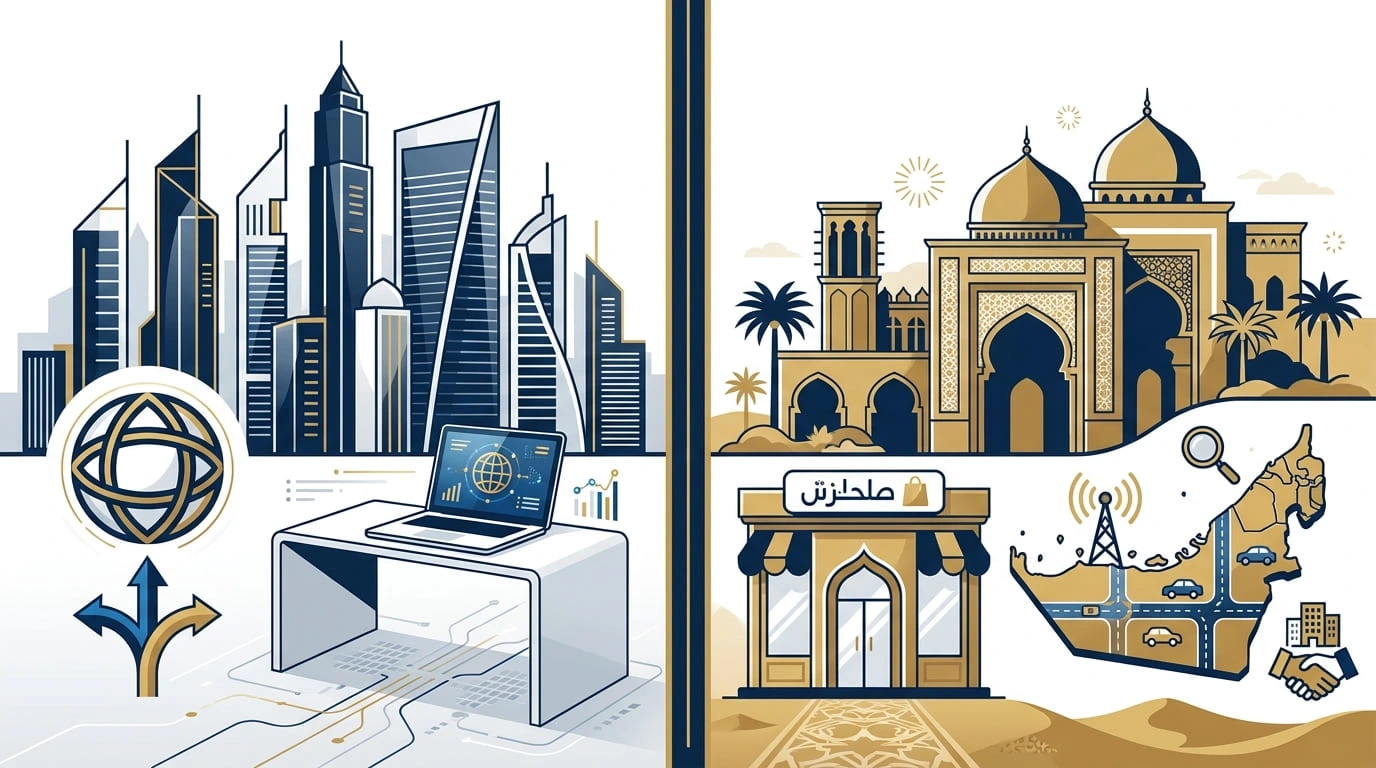
Free Zone vs Mainland UAE- The Complete 2026 Guide for Entrepreneurs
Deciding between two setups was extremely easy a few years ago.
If you wanted 100% ownership, you chose a Free Zone. If you wanted access to the UAE market, you accepted the mainland structure and its ownership limitations.
However, that distinction no longer exists.
Today, both Mainland and Free Zone setups offer 100% foreign ownership for most business activities. As a result, entrepreneurs entering Dubai in 2026 face a different question:
Where will your customers come from?
The answer to that question usually determines which setup makes the most sense.
An incorrect choice can bring you unnecessary costs, operational restrictions, or expansion challenges later. But the correct one can help your business scale far more efficiently from day one. Continue reading to know which one will work best for your business idea.
The Difference Between the Two Company Setups
It is worth clarifying what these structures actually mean for a clear understanding of the difference between mainland and freezone setups.
Mainland Company
A mainland company is licensed through Dubai’s Department of Economy and Tourism (DET). This structure allows businesses to operate throughout the UAE without major geographic restrictions.
Free Zone Company
A Free Zone company is established within one of Dubai’s designated economic zones. These zones were created to attract foreign investment through simplified setup procedures and business-friendly regulations.
The setup process may look similar on paper, but the practical differences become obvious once your business starts operating.
Why Many Entrepreneurs Still Choose Free Zones
Free Zones remain popular despite the mainland ownership reforms.
The reason is simple: many startups don’t actually need unrestricted access to the UAE market during their early years.
If your customers are located overseas or your services are delivered digitally, a Free Zone setup can offer an efficient starting point.
Businesses That Often Benefit From Free Zones
The following sectors choose to operate as a free zone in Dubai
- Digital marketing agencies
- Software companies
- E-commerce businesses serving international markets
- Consultants
- Freelancers
- Holding companies
- Export-focused trading businesses
Many Free Zones also offer startup-friendly packages that include licensing, visa allocation, and flexible workspace options. This can reduce initial setup complexity for first-time founders.
Where Mainland Have a Clear Advantage?
Some businesses eventually discover that customer access matters more than setup convenience.
If your goal involves selling directly to UAE consumers or businesses, mainland licensing often becomes the more practical choice.
When Mainland Is Often A Better Choice
Take a look at these scenarios to understand when a mainland company works as a better option.
| Business Type | What the Mainland offers |
| Retail Stores | Direct local sales |
| Restaurants and Cafes | Physical presence requirements |
| Construction Firms | Local project access |
| Healthcare Providers | Regulatory flexibility |
| Educational Institutions | Local operations |
| Trading companies | Easier UAE-wide distribution |
Mainland companies can generally operate anywhere in the UAE without needing intermediary arrangements or additional permissions that some Free Zone businesses may encounter.
A Quick Comparison Table For Free Zone vs Mainland
Free zone vs Mainland Dubai? Here is everything you need to know.
| Factor | Mainland | Free Zone |
| Foreign Ownership | 100% for most activities | 100% |
| UAE Market Access | Unrestricted | Usually restricted |
| International Trade | Allowed | Allowed |
| Corporate Tax | 9% above applicable thresholds | Potential 0% on qualifying income under QFZP rules |
| Office requirements | Often requires a physical office | Flexible options available in many zones |
| Setup Speed | Moderate | Often faster |
| Best for | UAE-focused businesses | International and export-focused firms |
While the table provides a useful overview for your business, the right choice will depend heavily on your business model.
The Tax Question in 2026
Tax is often the first thing entrepreneurs ask about.
Unfortunately, it’s also one of the most misunderstood parts of the discussion.
Many people still assume Free Zone companies automatically pay zero corporate tax.
That isn’t necessarily true.
- Under current UAE rules, Free Zone companies may qualify for a 0% corporate tax rate on qualifying income if they meet the requirements for Qualifying Free Zone Person (QFZP) status. Businesses that fail to meet those requirements may be subject to standard corporate tax rules.
- Meanwhile, mainland companies generally fall under the UAE corporate tax framework, which currently applies a 9% rate above the applicable profit threshold.
For many founders, tax should be considered alongside business operations rather than treated as the sole decision-making factor.
What You Need To Know About The Costs?
This is where things become less straightforward.
There isn’t a single “Free Zone cost” or “Mainland cost.”
The actual expense difference between Mainland and freezone UAE depends on several factors.
These are the:
- Business activity
- Number of visas required
- Office requirements
- Selected Free Zone
- Regulatory approvals
- Renewal obligations
That said, startups with limited budgets often find Free Zone packages attractive because they can bundle multiple setup requirements into a single solution.
Mainland setups may involve additional costs associated with office space and local operational requirements.
The cheapest option today may not always be the most cost-effective option three years from now.
The Expansion Question Most Founders Ignore
A common mistake is choosing a structure based entirely on current needs.
Businesses evolve.
The consultancy serving international clients today may decide to target UAE corporations next year. An online retailer may eventually open a physical showroom. A small trading company may pursue government contracts.
Before selecting a setup, ask yourself where you expect the business to be in three years.
Will your business
- Be still serving overseas clients?
- Expand across the UAE?
- Plan on hiring a larger workforce?
- Opening physical locations?
- Seeking government projects?
The answers often reveal which structure aligns better with long-term goals.
Entrepreneurs discussing their experiences online frequently highlight that market access and future growth plans become more important than setup costs over time.
A Simple Decision Framework
If you’re still undecided, this framework can help.
Choose the free zone if:
- Most clients are outside the UAE
- You provide digital or professional services
- You want a simplified startup process
- International trade is your focus
- You prefer lower initial complexity
Choose the Mainland based on the following Dubai mainland business activities list
- You want unrestricted UAE market access
- Your customers are primarily local
- You plan to open a retail location
- Government contracts are part of your strategy
- You expect significant local expansion
You need to notice that none of these points focus on ownership anymore.
In 2026, ownership is rarely the deciding factor. Customer location and business activity have become far more important.
License Fees- How Much Should You Budget?
One of the biggest misconceptions among first-time entrepreneurs is that there is a standard setup fee across Dubai.
The costs of the license fees vary depending on the business activity, jurisdiction, visa requirements, and office package selected.
Take a look at the general cost comparison for 2026:
| Factor | Mainland | Free Zone |
| License Fee | Typically higher | Available through startup packages |
| Registration Fees | Applicable | Applicable |
| Office Costs | Usually mandatory | Flexible options in many zones |
| Visa Costs | Additional | Additional |
| Renewal Fees | Annual | Annual |
Free Zones can offer a lower entry point because several costs are bundled into a single package for most of the startups. However, mainland businesses may include additional expenses related to office leasing and municipal requirements.
How Much Investment Do You Really Need?
Not every business entering Dubai requires a large amount of capital.
In fact, many consulting firms, digital agencies, and service-based businesses launch with relatively modest investments.
The required budget for Mainland vs freezone Dubai often depends on:
- Business activity
- Number of employees
- Office requirements
- Inventory needs
- Equipment costs
- Regulatory approvals
On average, the initial setup of a free zone takes AED 10,000 to AED 25,000+, whereas Mainland formation takes AED 15,000 to AED 40,000+.
Office Space Requirements- An Important Factor
Office requirements often influence costs more than licensing itself.
Many Free Zones offer:
- Flexi-desks
- Shared workspaces
- Virtual office options
- Small office packages
These solutions can help startups reduce expenses during the early stages.
Mainland businesses generally require a physical office address that complies with licensing regulations.
Opening a Corporate Bank Account
Many entrepreneurs spend weeks comparing setup options and almost no time thinking about banking.
Yet a business bank account is one of the most important parts of the setup process.
Both Mainland and Free Zone companies can open corporate bank accounts, but the real difference between Mainland and freezone UAE is that banks favor mainland businesses more due to their physical footprint.
The strongest applications are usually supported by
- A clear business plan
- Professional website
- Business activity alignment
- Proper financial documentation
This is one reason many business setup consultants encourage founders to prepare their banking strategy before submitting incorporation documents.
FAQS
Can a Free Zone company later convert to a Mainland company?
Yes. Many businesses begin in a Free Zone and later establish a mainland presence as their customer base and operational requirements change. The process varies depending on the jurisdiction and business activity.
Do all Free Zones offer the same benefits?
No. Dubai has numerous Free Zones, and each of them is designed for different industries and business types. The costs, visa allocations, office requirements, and licensing options can vary significantly between zones.
Is the Mainland always more expensive than the Free Zone?
No. While some Free Zones offer lower startup costs, the ongoing renewals, visa requirements, and future expansion needs can influence the long-term cost comparison of both types. The most cost-effective option depends more on your business model than the initial setup fee.
Final Thoughts
The Free Zone versus Mainland debate has changed dramatically over the past few years. The old conversation centered on ownership. Today’s conversation centers on strategy. If your revenue will come primarily from international clients, exports, or digital services, a Free Zone setup often provides a practical and efficient starting point.
If your growth depends on serving UAE customers directly, expanding locally, or participating fully in the domestic market, mainland licensing usually offers greater flexibility.